


With the entry of new fuels into the shipping sector comes a new set of risks that crews around the world must deal with. Through the Metafuel project, the Danish Institute of Fire and Security Technology wants to help the maritime industry on its way.
According to the International Maritime Organization, IMO, global shipping should be net CO2 neutral by 2050. The way to get there is primarily via a replacement of the conventional and highly polluting bunker diesel with some less black alternatives.
This work is already underway among several Danish Shipowners’ Accident Insurance Association members, and in the industry as a whole, with A.P. Moller – Maersk as one of the frontrunners. The shipping company has chosen to focus on methanol and is approaching 20 newly built vessels with dual fuel engines capable of running on bio- and e-methanol.
New fuels mean new types of risks, which UFDS has previously talked to Maersk about. In addition to methanol, the challenges are primarily related to ammonia and hydrogen, and these three fuels are also the focal point of the Metafuel project, which DBI – The Danish Institute of Fire and Security Technology has just completed together with the Danish Maritime Fund and Shipping Lab.
Covers from port to sea
Metafuel includes a method that maritime actors – not least the smaller ones – must be able to rely on in the future when assessing the use and relevance of available technologies, equipment and strategies to underpin fire safety in connection with the use of the new fuels.
»Basically, the project covers everything from when the fuel comes on board while the ship is in port until it is used at sea, that everything can be done safely, and that you have the right tools to deal with incidents or accidents,« explains Anders Viborg Kristensen, global business developer at DBI with a background as a seafarer, including 15 years at Maersk.
The execution of the project thus started with a mapping of the properties of methanol, ammonia and hydrogen, and the fire safety challenges they represent when used as fuel on ships.
»All other things being equal, the fuels must be handled by humans, so the people at the ports and not least the crews on the ships are the crucial component«
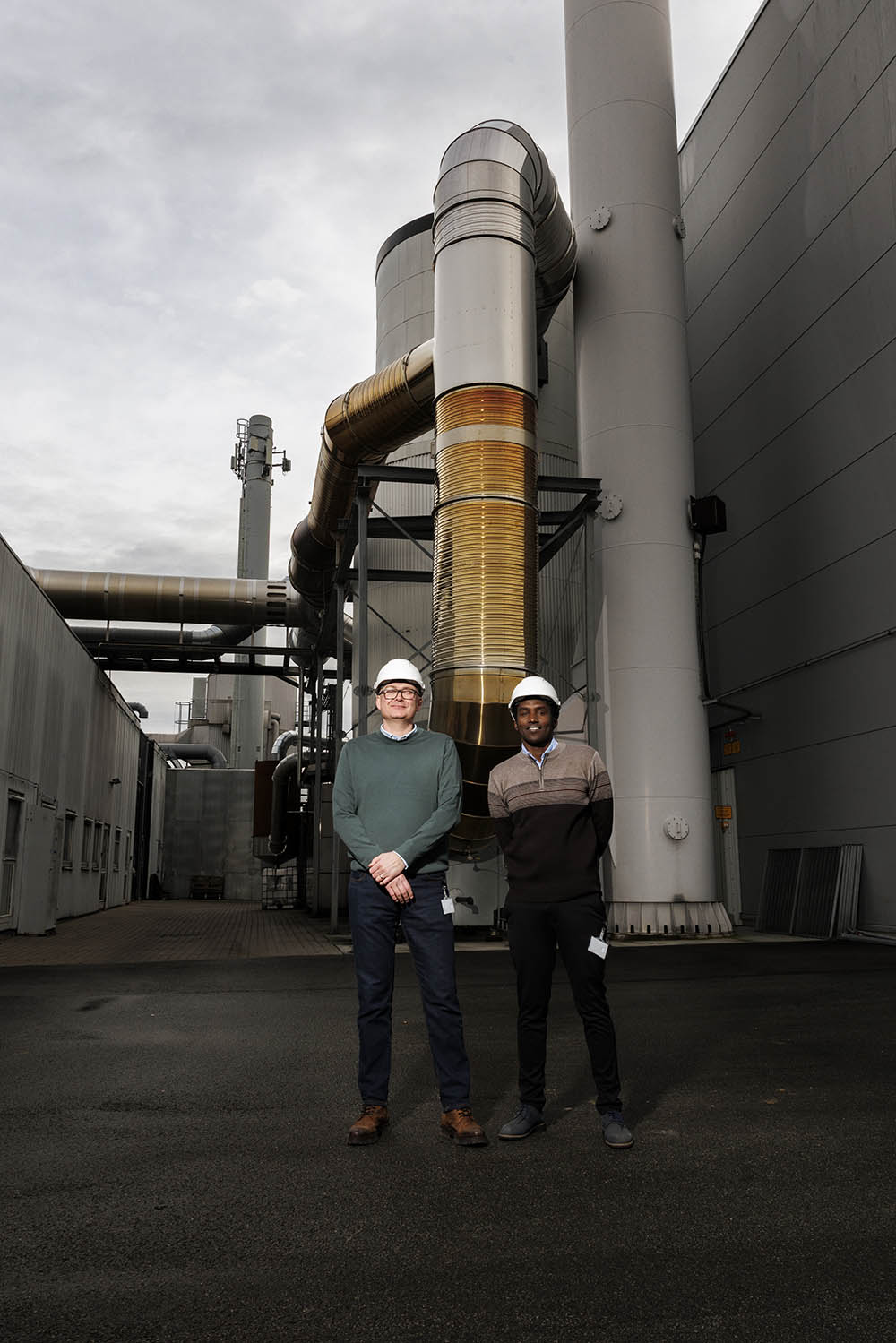
Leonard Sang Tuei, Project Manager, Danish Institute of Fire and Security Technology
Room for improvement
Perhaps the most important aspect, however, is the human factor, according to Leonard Sang Tuei, who led the Metafuel project as manager.
»All other things being equal, the fuels must be handled by humans, so the people at the ports and not least the crews on the ships are the crucial component. They need to know that they have something new in their hands and be able to act accordingly,« he says.
The Metafuel analysis has shown DBI how ready/mature the shipping industry is to handle the new fuels in the different zones. And there is room for improvement, the report points out, so DBI has set out to show the industry how to bridge the most pressing gaps.
As an example, Leonard Sang Tuei points to the suppression of methanol fires, where DBI has carried out some tests at the company's own facilities testing different nozzles to contain methanol fires in enclosed spaces like an engine room.
Shipping companies want to continue as usual
Similarly, DBI has performed simulations of about 20 scenarios for ammonia emissions during bunkering and how it spreads, depending on whether it is fully or partially cooled, what the weather conditions look like, and various other parameters.
»There are vessels and crews that are already working under these conditions, and they must be able to get the ship from A to B safely. So, experience is being built up in handling these fuels, and that is also one of our focus areas; to educate the crews through courses in handling the green fuels,« Leonard Sang Tuei says.
Another important factor, according to Anders Viborg Kristensen, is that the shipping companies in the future basically want to continue to do as usual. This means that when a ship is in port, cargo handling, crew change, perhaps some maintenance and, not least, refueling should be done simultaneously.
Ideally, green fuels should be able to become part of this reality, so players like DBI need to look at all the details to make sure that it can be done – but with consideration of the new risks that are in play for the port areas and vessels.
»I definitely believe that it is possible, provided that we do a proper job with the Metafuel tool. Ensuring that we can continue business as usual may sound easy – it won't be, but it will most likely be possible when we get down to the details,« Anders Viborg Kristensen says.