


The use of the greener fuels of the future in shipping places new demands on safety in the practical handling on board the vessels. Several UFDS members were present when DBI – Danish Institute of Fire and Security Technology held a workshop on the topic.
As described on this site, DBI – Danish Institute of Fire and Security Technology has recently completed the project Metafuel, which examines the challenges related to the use of methanol, ammonia and hydrogen – three of the most relevant fuels in the green transition of global shipping.
The use of the more environmentally and climate-friendly fuels not only leads to reduced CO2 emissions from the vessels, but also new fire safety risks for the crew members set to handle the substances on board the ships in the merchant fleet.
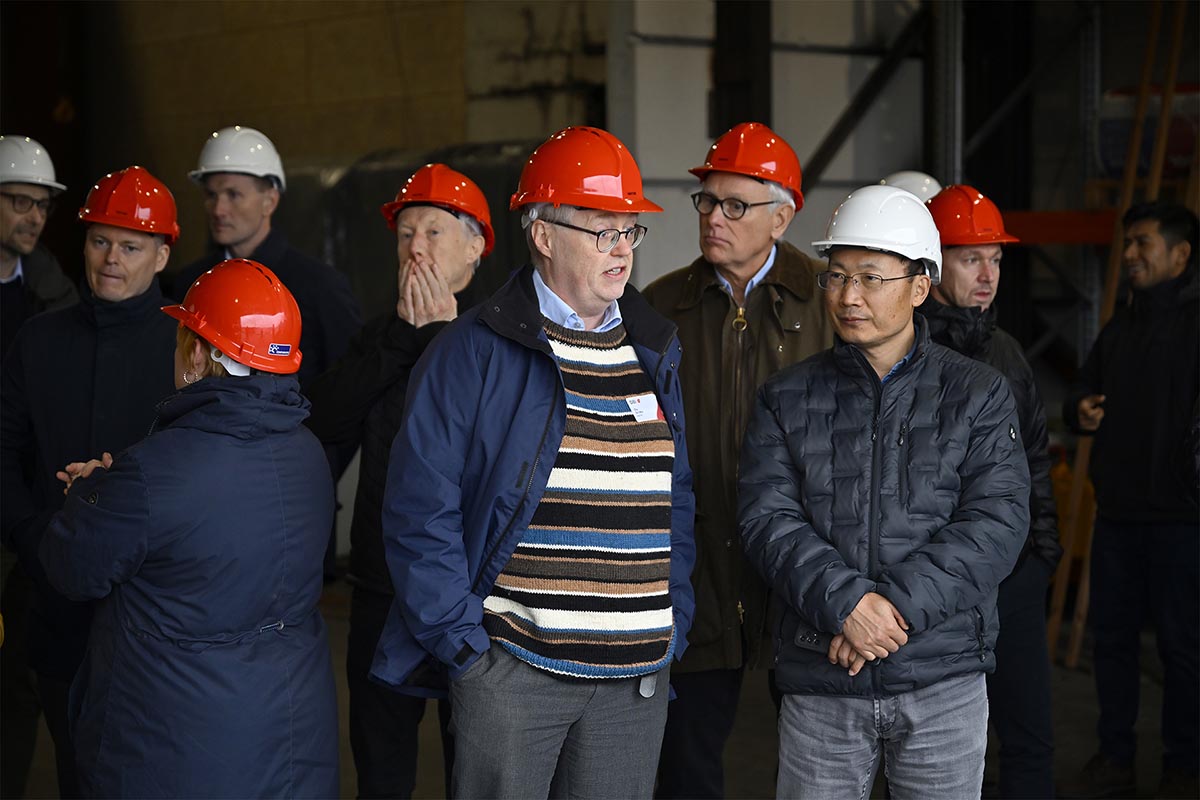
In order to present the project and offer relevant maritime stakeholders the opportunity to gain insight into the development and not least the practical aspects of the handling of the fuels, DBI recently held a workshop allowing both questions, collaboration and demonstrations.
The Danish Shipowners’ Accident Insurance Association participated in the event in line with, among others, representatives from A.P. Møller – Maersk, Hafnia, Cadeler and DFDS as well as the Danish Maritime Authority, Everllence – who as a manufacturer makes many considerations about safety – and several others.
'No cause for concern'
Project manager Leonard Sang Tuei The kicked of the afternoon's session by presenting the main findings of Metafuel, emphasizing among other things the important point that the human factor is crucial when the crews have to work with the fuels.
After the presentation, the assembly moved outside for a live demonstration of how it actually works when methanol and hydrogen burn compared to conventional diesel. This gave food for thought for, among others, Ola Stråby, Senior Lead Naval Architect at Maersk Line.
»I don't think we have seen anything that gives cause for concern, but it is clear that we must keep up with developments in this area and support where it makes sense. There is always more to learn, so we are keeping an eye on what is happening,« he said.
»It was both refreshing and thought-provoking to experience what it looks like when these fuels are ignited.«
Michael Klysner, marine engineer, Sustainable Fleet Projects, DFDS
Have a responsibility for the people involved
Participating on behalf of DFDS was Michael Klysner, a marine engineer in the company's Sustainable Fleet Projects department previously stationed on newbuilds in China with several of his almost 15 years in the shipping company as a seafarer.
»We have a green strategy for 2030, and we have a tonnage plan that supports all the fuels that are in play here today, so it's good to get some extra insight into what's going on. In addition, for us, it is also very much about the skills that are needed among our crews to work with these fuels. In the middle of the green transition, we must make sure that we do not design ships for people who are not there,« he said.
A key offshoot of the Metafuel project is a decision support tool aimed at helping maritime industry stakeholders achieve faster project approval, and regulators to develop preventive rules for the industry. DBI is currently putting the finishing touches on the tool, and this is also something DFDS will keep an eye on.
»The regulatory landscape is changing all the time, so I can easily see such a tool being relevant if, for example, you need to quickly screen a project. There are many different guidelines from class to class for the different fuels we are looking at, and as the number of fuels grows, you can lose track a bit,« Michael Klysner said.
»On top of that it was both refreshing and thought-provoking to experience what it looks like when these fuels are ignited. You’re reminded that we have to think about how to handle them on our ships, because one thing is to deliberately burn hydrogen or methanol out in the open, dealing with them in an engine room is something else entirely. We have a responsibility to the people involved.«