

UFDS has once again appointed new members to the Assembly of Delegates. Meet the three most recent here.
At the general meeting of the Danish Shipowners’ Accident Insurance Association at the end of April, three new members were elected to the Assembly of Delegates. This time they are Maria Roed from Northern Survey, Michael J. Bech from Torm and Carl Moltke from Cadeler.
Just like last year, we have talked to the trio about their respective backgrounds, expected contributions to the assembly and their views on future development in the area.
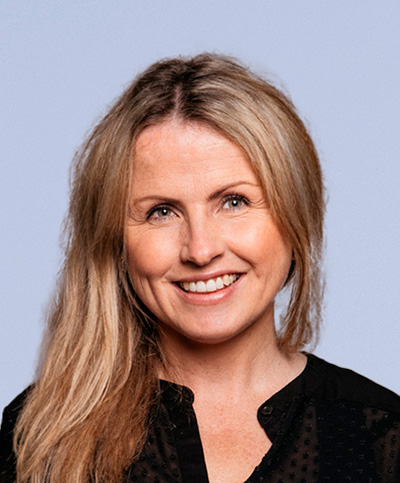
Maria Roed, Senior Advisor, Northern Survey
How would you describe your background in the maritime/insurance profession?
I have previously worked with employment efforts but then joined our family-owned shipping company just over 11 years ago, where my husband is the director and captain, and several others from the family also sail. My role is linked to the management part and the administrative setup around the company. When I started, it was only my husband and I with one ship, now we have four and a somewhat larger apparatus around the fleet, so a lot has happened.
On the one hand, I have a very hands-on mindset because I had to wear so many hats during my early days at Northern Survey, but on the other hand, I am also very strategic in the development of our business.
On the whole, we cultivate this practical approach to things in the office, where we have several people who sail themselves. This means that there is a short distance to our seafarers, so even though I don't sail myself, I still feel that I have a good insight into how everyday life and working at sea are connected.
What will you contribute as part of the Assembly of Delegates in UFDS?
I am generally very inventive and enterprising as a person, and I can quickly adapt from something we talk about on paper to relating to how it will work in reality. When we get an idea in the office, we have to discuss it with the people who will be working on a given initiative to find out if it will actually fit into their everyday life. So, I take that insight with me.
Insurance is basically something you hope never to need, and therefore preventive work also takes up a lot of my time – and in the shipping company in general. Among other things, we have taken a number of health initiatives on both the physical and the mental aspects over the years, which contribute to preventing accidents, and that perspective is one, I’d also like to share.
What development trends do you see in the UFDS area that the company should be aware of?
I see this particular issue of mental health and well-being as an important challenge. In my eyes, there are, for example, some elements about the fact that seafarers can be in contact with their family at home as much as is possible over the internet today, that are not necessarily only advantageous.
And physical and mental safety are connected. A lot of accidents happen when you are mentally not fully present in what you are doing, and in this respect it may well be that it is actually better for you as a seafarer to not be involved in all the dialogues about what is going on at home, when you cannot really contribute while at sea anyway.
As an employer, we have a responsibility to ensure that our crew members thrive physically and mentally in the framework we create on the ships, even when crew members are not on duty. There are some balancing acts in this area that are worth discussing in the assembly, I think.
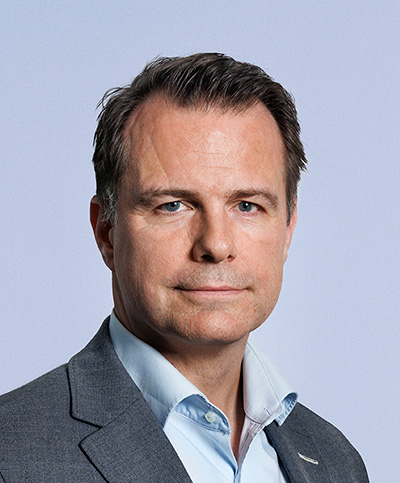
Michael J. Bech, Head of Claims, Torm
How would you describe your background in the maritime/insurance profession?
I have a background from the Armed Forces, where I am a trained officer and have sailed on different types of ships – including the last two years as a captain of maritime surveillance units.
In 2006, I went ashore, where I joined the operations department of a Norwegian tanker shipping company, and in 2010 I joined the operations department in Torm. Shortly thereafter, I became operations manager for the LR2 Pool, which is our collaboration with Maersk Tankers.
I was in the LR2 Pool for a couple of years before I came to Torm's head office, where I moved to the technical department in 2014 heading our Dry-Docking department for two years. For me, it was a technically heavy position, so I had to run fast, but it was super exciting to see that side of the business.
From 2016 to 2023, I served as crew manager for our European crew department, where I was responsible for our European seafarers. For the past three years, I have been the claims manager here at Torm, where I handle P&I, FD&D and sometimes H&M claims.
What will you contribute as part of the Assembly of Delegates in UFDS?
I hope I can help to keep the focus on the fact that in the end there is a seafarer somewhere in Denmark or around the world who has lost his or her income base. Either because he or she has been injured or become ill, or because he or she has lost his or her life, and there is a family that is entitled to compensation – which should come as soon as possible.
A ship is a potentially dangerous workplace, and I hope that with my insight I can help find flexible solutions so working at sea remains attractive.
I would like to help remind people of the human angle in the issue, so that we handle the people we are responsible for with warm hands, so that they do not risk becoming a number in a case file but instead receive quick and efficient case processing should an accident occur.
What development trends do you see in the UFDS area that the company should be aware of?
The whole green agenda is hugely exciting, and new technology is coming on board the ships on a large scale. Whether it is retrofit or newbuild, an issue of education comes along with it to ensure that the systems are used as intended to achieve the maximum effect.
The introduction of the new technologies does not necessarily mean that crew count on the ships will increase, so we must also think about the seafarers' working hours in this context. The likelihood of making mistakes and getting injured increases when you are tired, so it is important to focus on rest hour management. Again, it is really a question of making sure that sailing is still attractive.
Even though a lot is happening on the development front with autonomous ships, I still believe that there will be seafarers on the bridges for many years to come, and they need optimal working conditions. Because even though a robot or a computer can work round the clock, it will still be human hands that come to the rescue when things break down or do not work as intended.
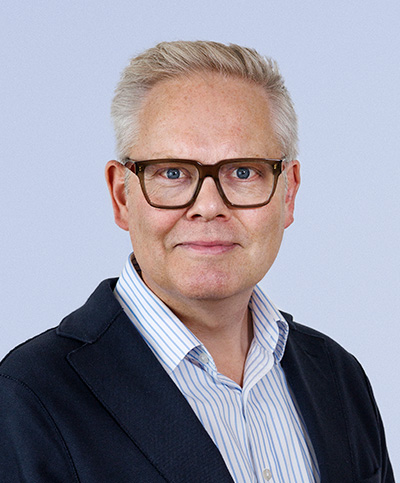
Carl Moltke, VP - Head of Legal, Cadeler
How would you describe your background in the maritime/insurance profession?
I have about 20 years of experience in the shipping industry since I graduated as a lawyer in 1997. First, I had a stint the Danish Maritime Authority before I came to Maersk, where I was in Maersk Contracters, APM Terminals and the parent company. Subsequently, I spent seven years as General Counsel at Nordic Tankers and just as long at Lagkagehuset with responsibility for insurance at both, so I have worked in that area for 14 years.
The shipping industry appeals to me because I think it helps to solve an important societal function. Searching for energy, meeting the demand for transport of goods and raw materials, or contributing to the green transition.
I have worked with drilling rigs, container ports and in a chemical tanker shipping company. Now it is about the installation of offshore wind farms, so many different types of maritime environments with different types of assets, but with a common thread around the legal aspects.
What will you contribute as part of the Assembly of Delegates in UFDS?
My experience spans a very wide in the maritime environment, and I would like to use it to help strengthen the Danish maritime industry, which has been part of the backbone of Danish business for several hundred years. I think that makes good sense, also considering the increased competition from outside.
In general, I come into the Assembly of Delegates with a humility to listen and learn and then contribute my perspective as I get to grips with the issues.
What development trends do you see in the UFDS area that the company should be aware of?
Speaking of foreign competition, I think it is very important to maintain the Danish flag as a flag of quality and to ensure a high standard of seafarers' working conditions, including, of course, safety on board vessels in the Danish merchant fleet.
In addition, I also think it is extremely important that Denmark remains a relevant, strong player in the green transition, where we as a nation should be a pioneering country. This applies both to the tasks that the maritime industry solves, and to the shipping companies' own footprint through fuel use and so on.